
CLEAN ENERGY FOR REGIONAL AUSTRALIA
Turning Australia's Waste Into Clean Energy.
Australia's farms, councils and regional towns face severe pressure on water security, organic waste, energy costs and ageing infrastructure. Blue Systems steam reforming converts farm residues and municipal waste into GreenSynGas™, Hydrogen & Ammonia — right where the waste is made.
Waste Streams Converted
Farm + Council
Open-Field Burning
Zero
Focus Regions
QLD · NSW · MDB
The Australian Challenge
Six Systemic Pressures, One Practical Answer
Municipal, regional and agricultural Australia share the same bottlenecks: problem waste, filling landfill, expensive power, ageing utilities and scarce water. Blue Systems addresses them all with decentralised, modular waste-to-energy.
Farm & Kerbside Waste
Stubble, bagasse and livestock residue, plus food and garden organics from the bin.
Landfill Crunch
Sydney, Melbourne and south-east Queensland are running short of compliant landfill space.
Levies & Long Hauls
Escalating landfill taxes and long-distance hauling make disposal costly and carbon-heavy.
Energy Costs
Crippling electricity and diesel bills for pumps, cooling and irrigation.
Policy Squeeze
An 80% national recovery target and tighter EPA licences close off traditional disposal.
Water Scarcity
Drought cycles and strict diversion limits on river allocations.
Agricultural Sector
From Farm Waste to Farm Power
Organic Waste & Agricultural Residue
Stubble, bagasse and livestock waste
THE ISSUE
Broadacre cropping, sugarcane farming (particularly across Queensland and northern New South Wales) and intensive livestock industries generate massive volumes of residue. Open-field burning and aerobic decomposition add carbon emissions, soil nutrient leaching and strict environmental scrutiny.
THE BLUE SYSTEMS SOLUTION
Steam reforming cleanly converts agricultural biomass and municipal solid waste into high-value GreenSynGas™, Hydrogen & Ammonia, bypassing incineration emissions — turning problem waste into local energy and chemical feedstocks. Each unit also yields potable water and biochar, both returned to the farm: water for stock and irrigation, biochar worked back into the soil to hold moisture and nutrients.
Regional Energy Independence
High power costs for irrigation
THE ISSUE
Regional farming enterprises and remote processing hubs face crippling electricity and diesel costs to run deep-bore pumps, refrigeration and irrigation infrastructure.
THE BLUE SYSTEMS SOLUTION
Decentralised deployment lets co-ops and regional shires use local organic by-products to generate on-demand baseline power and clean hydrogen fuel — cutting reliance on volatile grid electricity and expensive diesel transport.
Municipal Waste & Regional Infrastructure
The Municipal Waste Squeeze
Australia generates roughly 79 million tonnes of waste a year — nearly 2.9 tonnes for every person — and about 18% of it arrives as municipal solid waste from kerbside bins, public spaces and council operations. Landfill has been the default outlet, and that outlet is closing.
79 Mt
of waste generated across Australia each year
2.9 t
generated per person, every year
18%
of it is municipal kerbside waste
80%
national resource recovery target
Landfill Space & Escalating Levies
Sydney, Melbourne and south-east Queensland
THE ISSUE
Compliant, easily accessible landfill around Australia's major centres is running out, while state landfill levies keep climbing to push councils toward recovery. For regional and outer-metropolitan councils the alternative is hauling waste ever longer distances to centralised sites — expensive, and carbon-heavy.
THE BLUE SYSTEMS SOLUTION
A modular unit sited where the waste is collected cuts haulage distance and landfill volume at once. Kerbside and council waste that would be dumped or trucked long distances becomes clean syngas or hydrogen — turning a disposal cost into a local energy asset.
Organics & the FOGO Bottleneck
Food and garden waste from the kerbside bin
THE ISSUE
Organics make up a massive share of the municipal bin stream, and states are rolling out mandatory food-and-garden (FOGO) collections quickly — but local processing capacity has not kept pace. Composting sites draw odour complaints, struggle with contamination and often sit far from the material they take in.
THE BLUE SYSTEMS SOLUTION
Steam reforming accepts wet and contaminated organics that composting cannot, converts them on site, and leaves no open burning and no secondary pollution — the missing local processing step councils have been waiting for.
National frameworks target 80% resource recovery and a sharp cut in organics sent to landfill, while environmental authorities in New South Wales, Victoria and Western Australia have tightened licence conditions — making open dumping or low-standard burning legally untenable.
Ageing Water & Waste Assets
Hundreds of communities, limited budgets
THE ISSUE
National infrastructure bodies highlight a severe investment gap for regional and remote communities. Ageing water treatment plants, high landfill volumes and tight council budgets leave smaller towns struggling to maintain compliant, resilient utilities.
THE BLUE SYSTEMS SOLUTION
A modular, high-efficiency pathway to waste diversion. Municipal solid waste bound for regional landfill becomes clean syngas or hydrogen — solving the waste liability while creating a clean energy asset.
+
↓
Water Security
Energy That Doesn't Compete for Water
THE ISSUE
Heavy reliance on surface-water catchments leaves towns and farms exposed to prolonged drought. Sustainable Diversion Limits under frameworks like the Murray-Darling Basin Plan cap how much water communities and growers can extract.
THE BLUE SYSTEMS SOLUTION
Unlike combustion or water-hungry energy plants, advanced steam reforming runs with closed-loop or minimal water use. Paired with industrial processes, it creates a climate-independent source of green fuel and power that never draws on drinking water or constrained river allocations. Each unit also yields potable water and biochar — both returned to the agricultural cycle as irrigation and stock water and as a soil amendment that holds moisture and nutrients.
The Blue Systems Cure
Steam Reforming: Transforming Waste to Wealth
Clean Conversion
High-temperature thermochemical reforming with no incineration emissions.
Modular & Local
Units sited at farms, mills and council waste hubs — no long-distance hauling.
On-Demand Output
Syngas and hydrogen for baseload power, fuel and chemical feedstock.
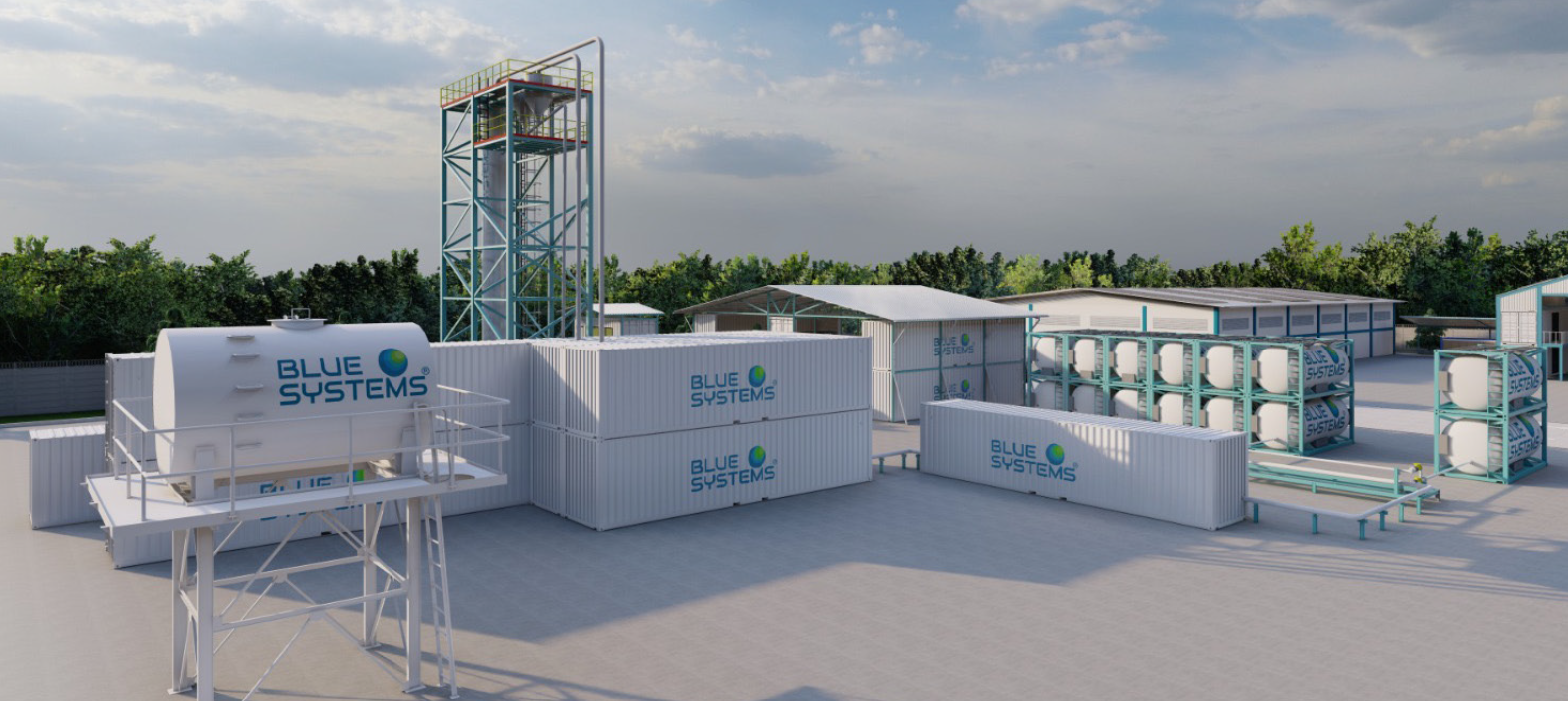
BLUE SYSTEMS 50 TONNE PER DAY MODULES
Space Requirement: A 50-tonne per day processing plant requires approximately 1 acre (roughly the size of a football pitch).
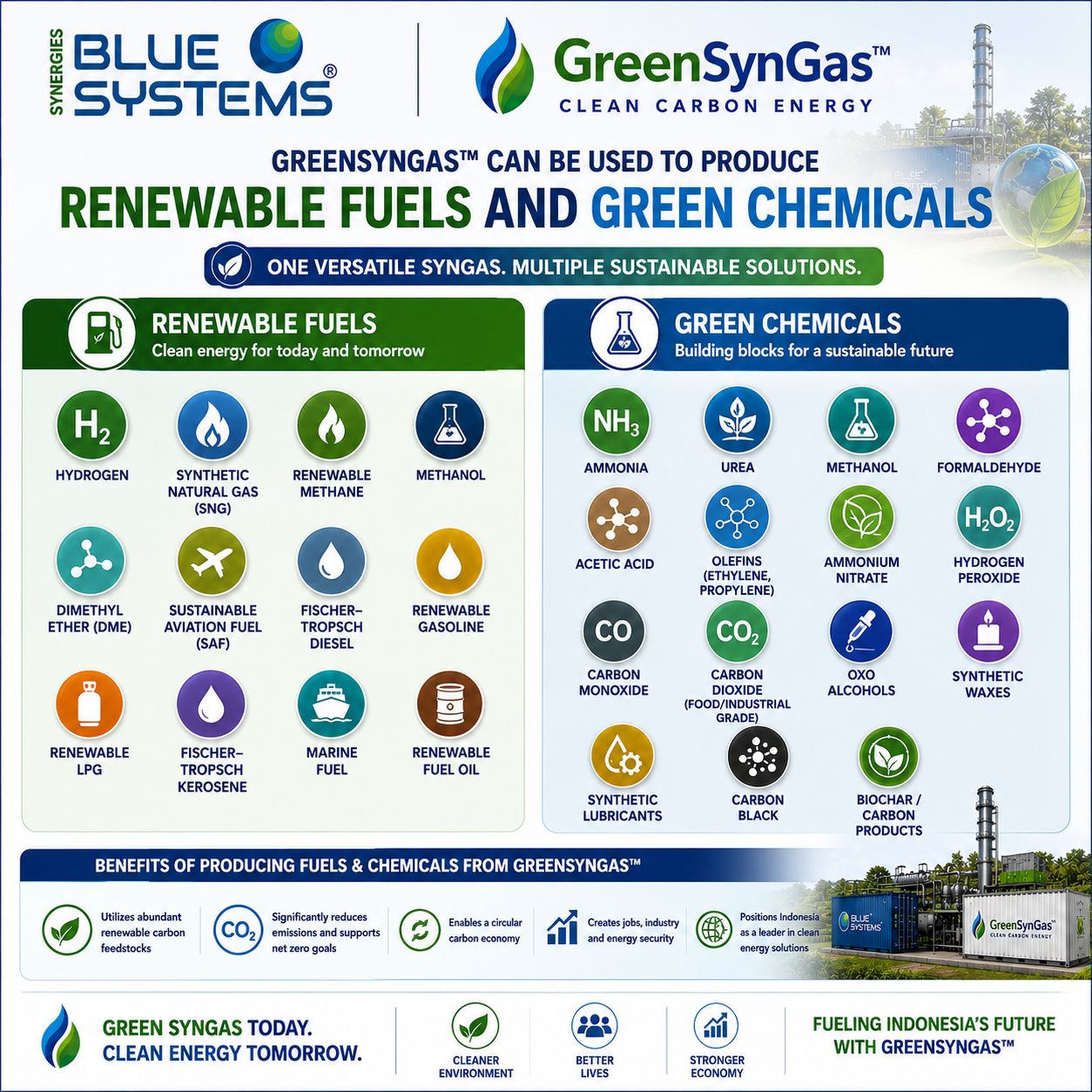
Gas Offtake & Blending: The GreenSynGas™ we produce can be injected into conventional gas pipelines, blended at 10–15% with natural gas, and utilized within existing infrastructure for power generation.
Plant Location: While proximity to either the waste feedstock source or the power user is advantageous, it is not strictly essential.
Energy Conversion Support: If your project requires assistance with energy conversion, we can fully support you with that as well.
Potential GreenSynGas™ Value
A$5,600
Estimated CO₂ Prevented
18.5 Tons
Illustrative estimates based on A$560 per processed tonne (US$400 converted at US$1 = A$1.40) and 1.85 tonnes of avoided CO₂ per tonne. Actual results depend on feedstock and project conditions; not guaranteed.
Apply for Deployment
Councils, Co-ops and Growers: Let's Talk
Tell us about your site, waste streams and energy needs. Email Daniel at daniel@quettil.com to start the review process.
1. Describe Your Site
Location, available land and grid connection.
2. Share Your Feedstock
Residue types, council waste volumes and seasonality.
3. Start the Review
Our team assesses fit, output and project economics.